Why Cleaning Your Lint Trap Is Not Enough
Hidden lint buildup, warning signs, and when to have your dryer vent cleaned.
Cleaning your lint trap after every load is a good habit, but your dryer vent needs attention, too. Lint can still collect in the vent that carries air outside, making clothes take longer to dry and increasing the risk of overheating or fire.
It’s an easy task to forget, especially when the dryer seems to be working just fine. At Home Heating Service, Inc., we help our Colorado Springs neighbors with professional dryer vent cleaning. Here’s what to keep an eye on and how to keep this small maintenance task from getting overlooked.
Why the lint trap is only part of the job
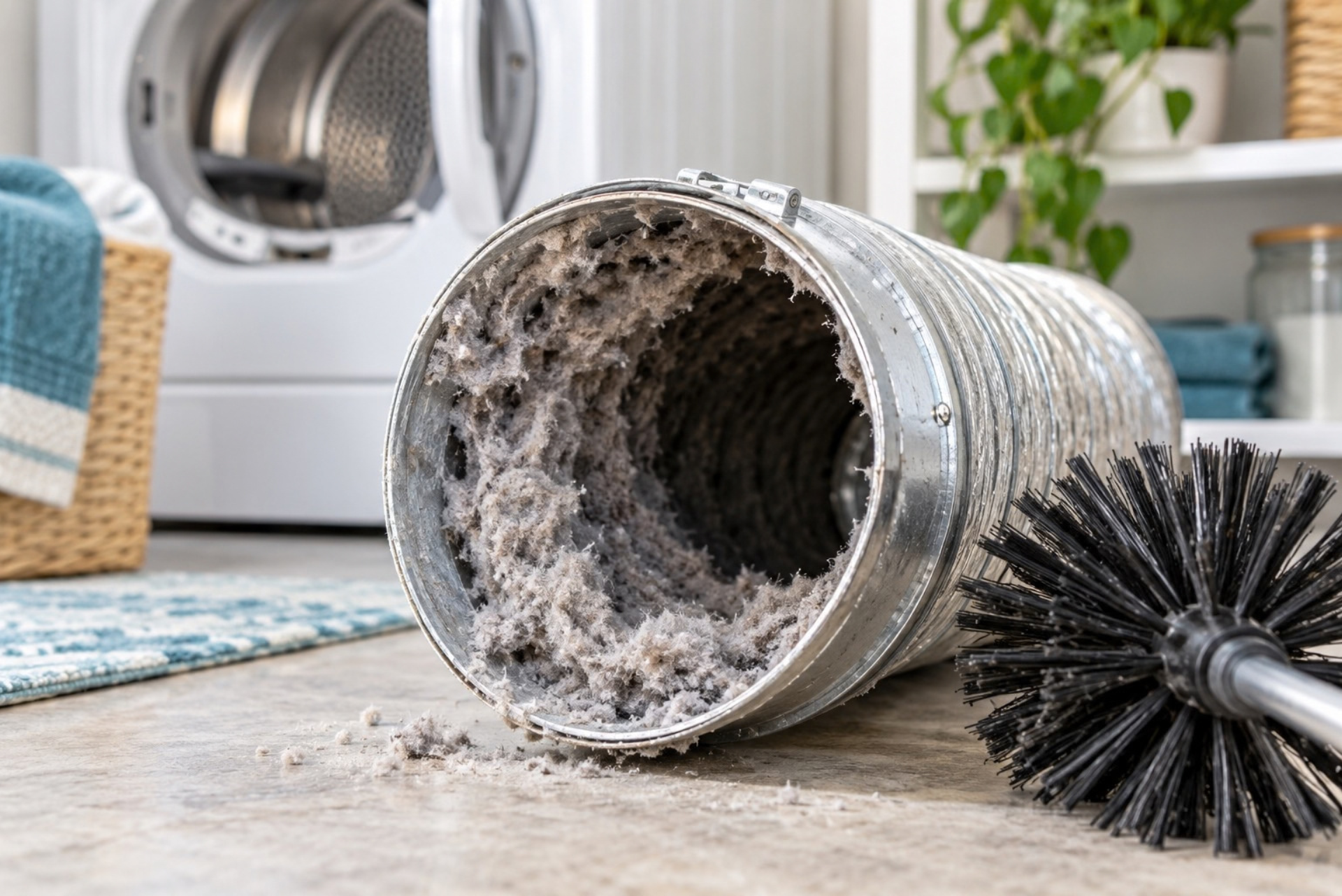
Your lint trap is the removable screen you clean between loads. Your dryer vent is the exhaust duct that carries warm, moist air from your dryer to the outdoors.
The screen catches lint, but some still makes its way into the exhaust duct. Over time, it can build up and get in the way of airflow. So even when you’re keeping that screen clean, there may be lint collecting where you can’t see it.
Why dryer vent cleaning matters
If you’ve ever pulled out a load of towels only to find they’re still damp, you know how frustrating an extra drying cycle can be. A restricted vent can keep your dryer from moving moisture out as it should. More cycles mean more time spent on laundry and more energy used.
There’s a safety reason to stay on top of it, too. The U.S. Fire Administration warns that leaving lint filters and dryer vents uncleaned increases the risk of a dryer fire. Keeping both clean is a practical way to help care for your home.
Signs your dryer vent may need attention
You know your usual laundry routine. If something changes, it’s worth paying attention. Have the vent checked if:
- Clothes take longer to dry than they used to.
- A normal load needs another cycle to finish drying.
- Airflow at the outside exhaust seems weak.
- The outdoor vent flap does not open while the dryer runs.
A clogged vent is one possible cause of these changes. A crushed duct or an issue with the dryer itself could also be involved. If cleaning the vent doesn’t solve the drying problem, an appliance service professional can help check the dryer.
How often should a dryer vent be cleaned
A good starting point is once a year, and sooner if your clothes begin taking longer to dry. That follows NFPA guidance for vent-pipe cleaning. Check your dryer’s care manual for any specific maintenance instructions, too.
If you can’t remember the last cleaning, add it to your home maintenance list. There’s no need to wait until fall if you’re already noticing a problem.
What homeowners can do between cleanings
- Clean the lint trap after every load.
- Keep the area around the dryer free of loose lint and clutter.
- Check visible venting for damage or crushing.
- Check that an accessible outdoor vent opens during operation.
- Avoid leaving the dryer running when you leave home or go to bed.
Keep up with these everyday habits, and remember to give the exhaust vent its own place on your maintenance calendar.
We’ve been helping our Colorado Springs neighbors care for their homes since 1988. Our professional dryer vent cleaning removes accumulated lint from the exhaust vent to help your dryer run more safely and efficiently.
If it’s been a while, or laundry is taking longer than it used to, give Home Heating Service a call or book online. We’re here to help you get it taken care of.
We Listen. We Solve.