Is Your AC Running Constantly? What’s Normal During a Colorado Springs Heat Wave
Learn when longer AC run times are normal during hot Colorado Springs weather and when your system may need professional attention.
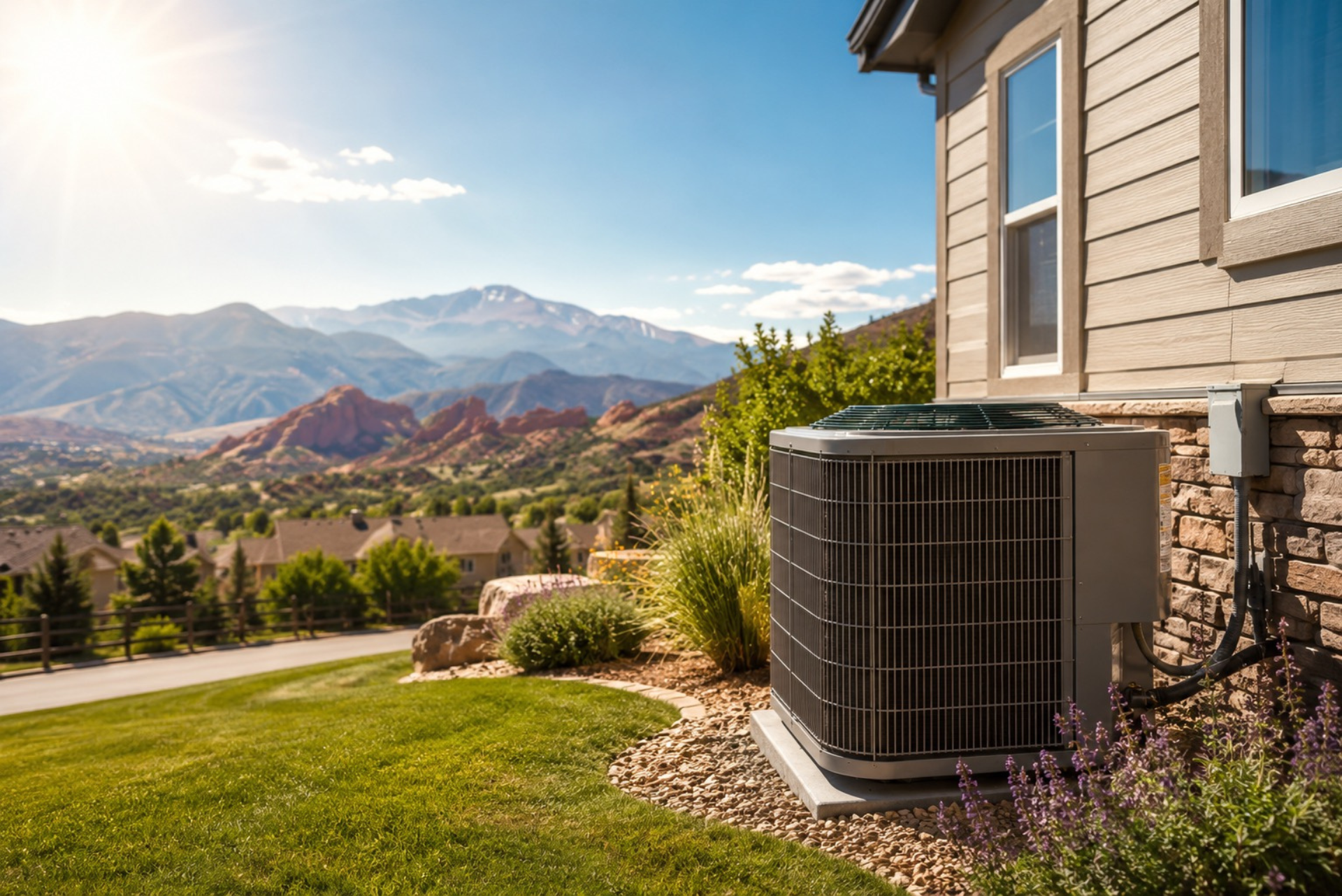
When summer temperatures climb in Colorado Springs, your air conditioner has to work harder to keep your home comfortable. That can mean longer cooling cycles, a warmer upstairs, or a system that seems to run most of the afternoon.
So, is it normal for your AC to run constantly during a heat wave?
Sometimes, yes. The important question is whether it is still keeping your home comfortable.
Why Your AC Runs Longer in Hot Weather
Your air conditioner removes heat from inside your home and releases it outdoors. When temperatures reach the upper 80s and 90s, that process becomes more difficult.
Your home is also gaining heat from direct sunlight, windows, appliances, people, pets, and air leaks. Homes with upper levels, large west-facing windows, vaulted ceilings, or older insulation may feel the heat even more.
During mild weather, your AC may run in shorter cycles. During a Colorado Springs heat wave, it may need to run much longer to maintain the thermostat setting.
That does not automatically mean something is wrong.
When Longer Run Times Are Normal
Your AC may be operating normally if:
- Your home stays close to the thermostat setting
- Airflow from the vents feels strong
- The air coming from the vents feels cool
- The system eventually cycles off as temperatures drop
- There are no unusual sounds, smells, or leaks
A long, steady cooling cycle during the hottest part of the day can be normal.
The bigger concern is when the AC runs constantly but the temperature inside continues to rise.
Signs Your AC May Be Struggling
It may be time to schedule service if you notice:
- Your home keeps getting warmer
- Airflow feels weak
- The system turns on and off repeatedly
- Ice forms on the refrigerant line or indoor equipment
- You hear new buzzing, grinding, rattling, or squealing sounds
- A breaker trips when the AC starts
- Some rooms are suddenly much warmer than others
- Your electric bill increases more than expected
These symptoms can point to restricted airflow, dirty coils, electrical problems, low refrigerant, ductwork concerns, or worn components.
Simple Things to Check First
Before calling for service, there are a few safe things you can check.
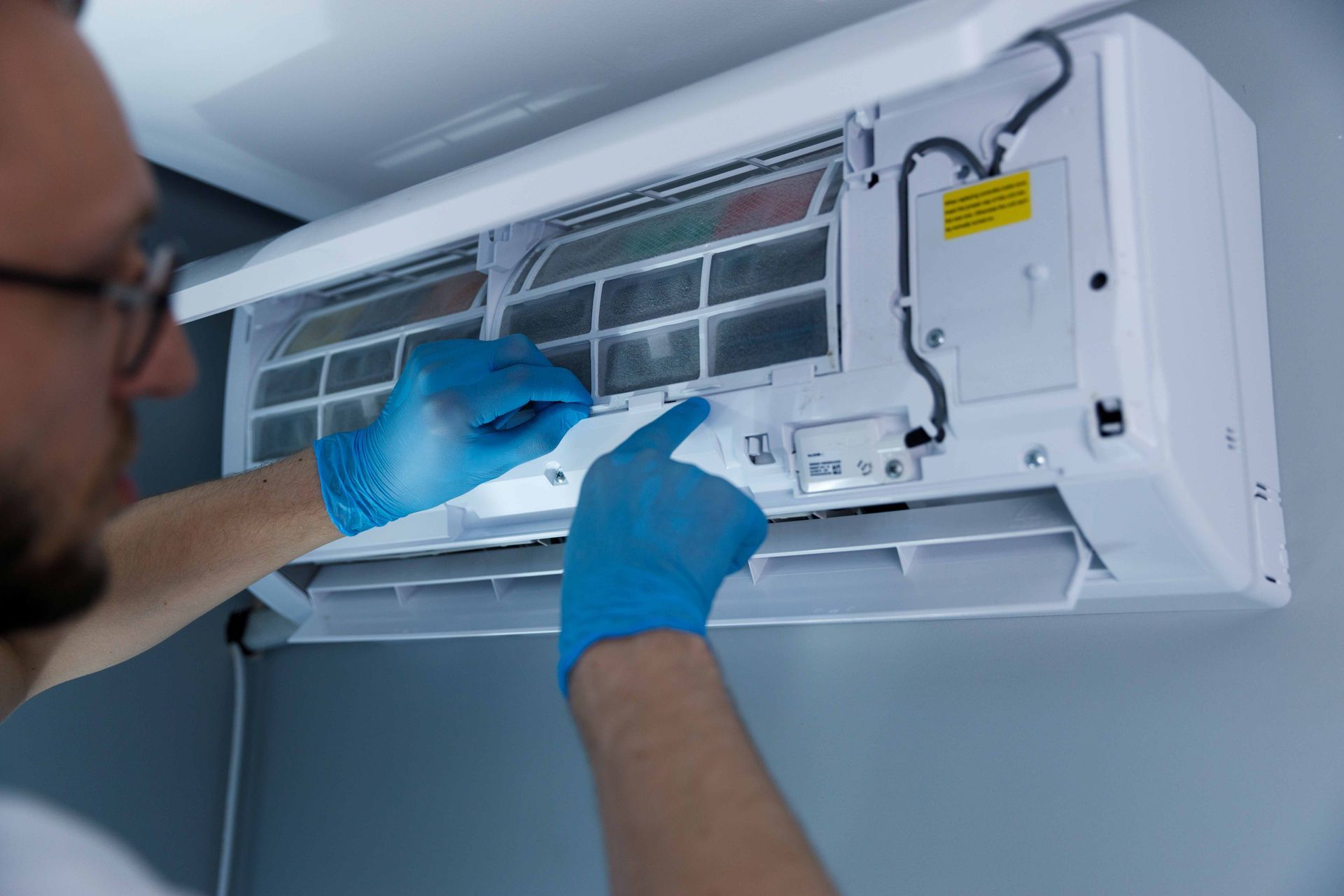
Check the air filter
A dirty filter can restrict airflow and make the system work harder. Replace it if it looks heavily coated with dust and debris.
Review the thermostat
Make sure it is set to COOL and the fan is set to AUTO. Setting the thermostat much lower will not cool the home faster. It will only cause the system to run longer.
Check your vents
Make sure supply and return vents are open and not blocked by furniture, curtains, rugs, or boxes.
Look around the outdoor unit
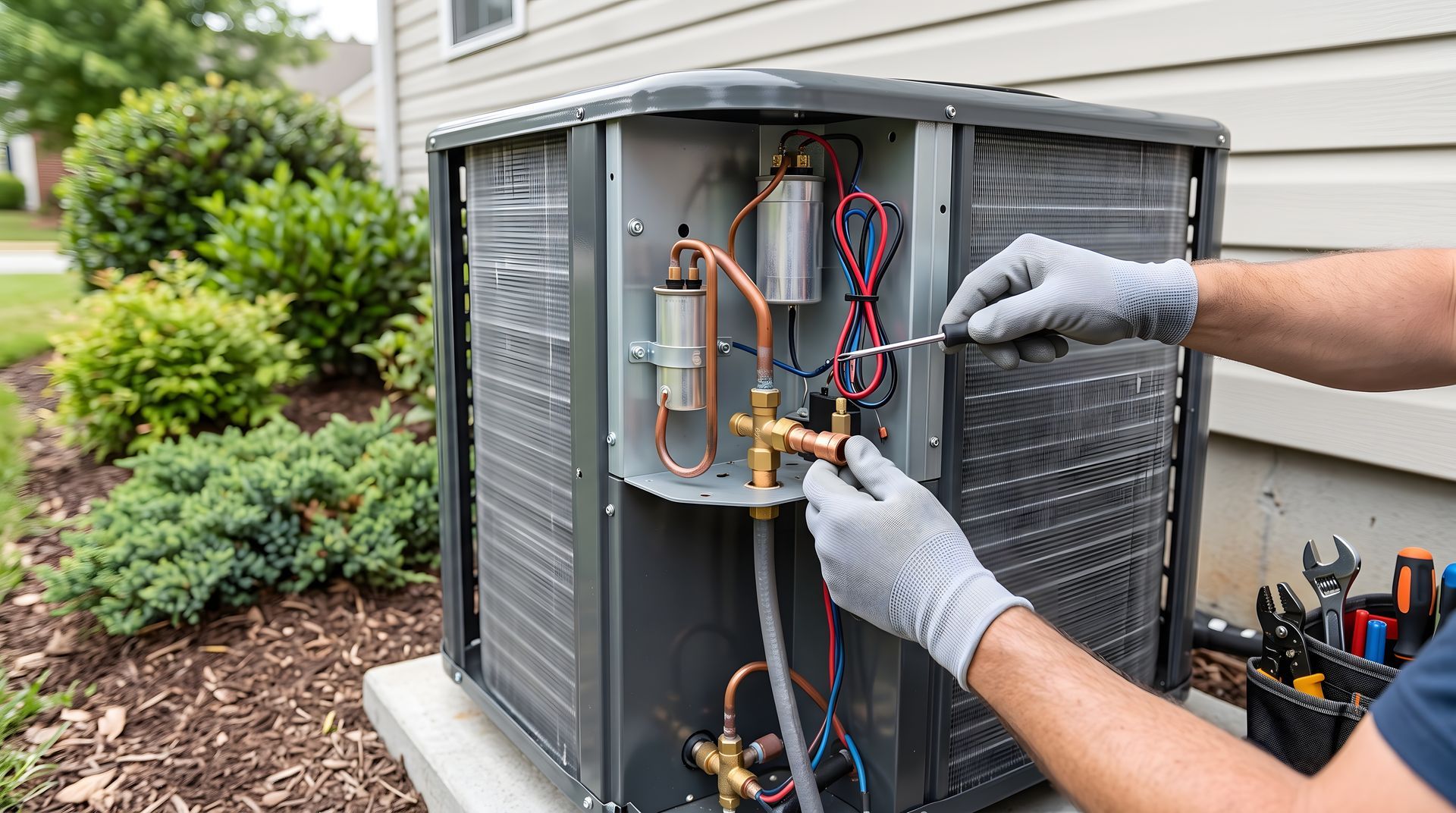
Remove leaves, weeds, and other debris from around the unit so it has room to move air. Do not remove panels or attempt internal repairs yourself.
Reduce heat inside the home
Close blinds during the hottest part of the day, limit oven use, keep exterior doors closed, and use ceiling fans in occupied rooms.
These steps may help your home feel more comfortable and reduce some of the load on your AC.
Why Is the Upstairs Warmer?
A warmer upstairs is common during the summer because heat rises and upper floors often receive more heat from the roof and afternoon sun.
A small difference between floors may be normal. A large or newly developed difference may be related to airflow, duct leaks, insulation, blocked vents, or an unbalanced system.
If one part of your home never becomes comfortable, lowering the thermostat may not solve the underlying problem.
When to Call for AC Service
It is a good idea to schedule a professional diagnostic when:
- The AC runs constantly without reaching the thermostat setting
- The home continues getting warmer
- Airflow is weak
- Ice appears on the system
- The outdoor unit is not running
- You notice unusual sounds or smells
- A breaker repeatedly trips
A full diagnostic can help determine whether the issue involves airflow, refrigerant, electrical components, coils, the thermostat, ductwork, or another part of the system.
The goal is to understand why the AC is struggling and recommend the right solution for your home.
Can Maintenance Help During a Heat Wave?
Maintenance cannot change the outdoor temperature, but it can help your system operate as effectively as possible.
During maintenance, a technician may find dirty coils, weak capacitors, airflow restrictions, loose electrical connections, drainage concerns, or other developing problems.
Catching those concerns early may help prevent a breakdown during the hottest part of the summer.
Frequently Asked Questions
Is it normal for an AC to run all day during a heat wave?
It can be normal during extreme heat, especially in the afternoon. The system should still maintain a reasonably comfortable indoor temperature.
Why is my AC running but not cooling the house?
Possible causes include a dirty filter, restricted airflow, dirty coils, electrical issues, low refrigerant, thermostat problems, or ductwork concerns.
Should I turn my thermostat lower when it is very hot?
Choose a comfortable setting and keep it relatively steady. Lowering it dramatically will not make the system cool faster.
Should I turn off my AC if it cannot keep up?
If it is producing cool air and running steadily, it may simply be working hard. Turn it off and call for service if you see ice, smell burning, hear severe mechanical noises, or have a breaker that repeatedly trips.
We Listen. We Solve.
Your AC may run longer during a Colorado Springs heat wave, but your home should still feel reasonably comfortable.
If your system is running constantly and falling farther behind, it may be time to have it checked before a small concern becomes a midsummer breakdown.
Home Heating Service has served Colorado Springs homeowners since 1988 with straightforward HVAC solutions and a no-pressure approach.
Call (719) 591-9777 or use our Book Now option to schedule AC maintenance, repair, or a professional system diagnostic.