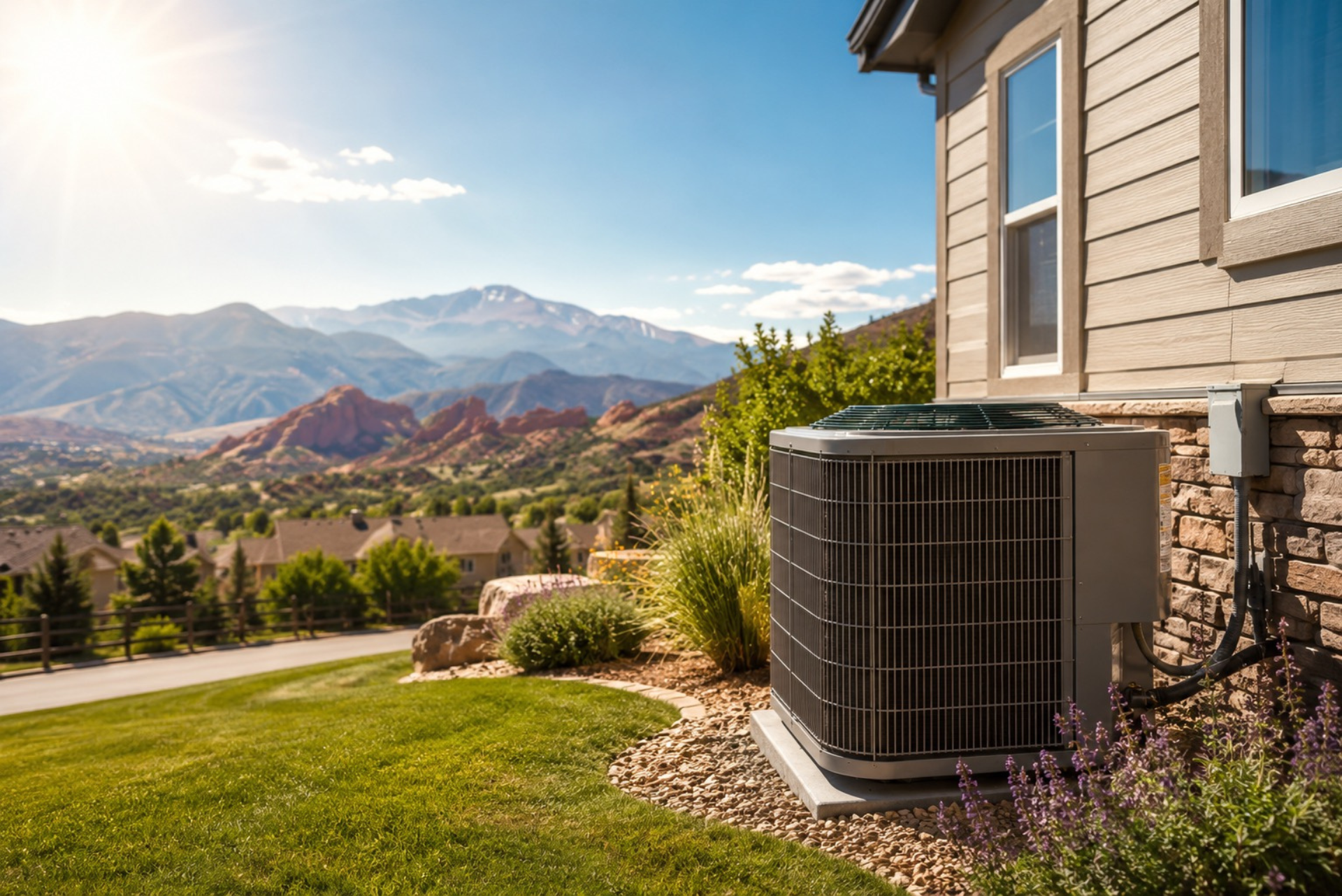
How Monument, CO's High Altitude Affects Your HVAC System in 2026
Living at roughly 7,000 feet above sea level in Monument, CO, means the air is noticeably thinner than at sea level, and that physics has direct consequences for your HVAC system. This article explains how high altitude affects combustion, BTU output, and heat pump performance, and what Monument homeowners can do about it in 2026.
How Does High Altitude Affect HVAC Combustion and BTU Output?
High altitude reduces the oxygen available per cubic foot of air, which directly changes how your furnace burns fuel. Gas burners are factory-tuned for a precise fuel-to-air mix. When the air thins at elevation, that mix is thrown off, heat output can fall, and emissions may rise unless adjustments are made.
At 7,000 feet, every burner port in your furnace pulls in fewer oxygen molecules per cycle. The oxygen percentage stays constant at about 21%, but the mass of oxygen per cubic foot drops meaningfully compared to sea level. Homeowners seeking HVAC services in Monument, CO, should confirm that any technician they hire understands these elevation-specific combustion dynamics.
What Is Furnace Derating and Why Does It Matter in Monument?
Derating is the process of intentionally lowering a furnace's input BTUs to match the oxygen available at your elevation. A widely used industry rule calls for reducing furnace input by approximately 4% for every 1,000 feet above 2,000 feet. For Monument at around 7,000 feet, that represents a meaningful reduction from the nameplate BTU rating on your unit.
Running a furnace at sea-level settings at Monument's elevation can push combustion over-fueled, leading to higher carbon monoxide output from incomplete combustion, reduced efficiency, and added stress on the heat exchanger. A properly derated system burns cleaner and lasts longer.
Manufacturers typically address altitude with high-altitude kits or burner orifice changes that reduce fuel flow to match available oxygen. If your furnace was installed without accounting for Monument's elevation, it may not be calibrated correctly. This is one of the most common issues that HVAC services in Monument, CO, are called to address on existing installations.
How Does Monument's Elevation Affect Heat Pump Performance?
Heat pump performance at Monument's elevation is affected by both cold winters and thinner air. Because air is less dense at high altitudes, coils exchange less heat and fans move fewer cubic feet per minute at the same motor speed.
Research conducted with the National Renewable Energy Laboratory found that air-source heat pumps can perform up to 10% less efficiently at higher Colorado altitudes compared to sea-level ratings. A system sized using standard calculations may fall short during the coldest nights, when Monument temperatures can push toward zero. Choosing a provider that specializes in HVAC services in Monument, CO, helps ensure your heat pump is sized with these altitude penalties factored in.
Do Cold-Climate Heat Pumps Work at 7,000 Feet?
Cold-climate heat pumps can be a viable option in Monument, but they require careful selection and sizing. For homes above 6,000 feet, units designed for high-altitude operation are essential. Modern cold-climate models use variable-speed compressor technology to maintain heating output in extreme cold. Many Monument homeowners pair a heat pump with a gas furnace backup, creating a dual-fuel system. This lets the heat pump handle most heating hours while the furnace covers the coldest nights.
Signs Your HVAC System May Not Be Altitude-Calibrated
Watch for these warning signs that your system may not be properly adjusted for Monument's elevation:
- Your home takes longer than expected to reach the set temperature on cold mornings.
- Energy bills are higher than they should be for your home's square footage.
- You notice yellow or orange burner flames instead of a steady blue flame.
- The furnace short-cycles without maintaining a steady temperature.
- Your heat pump runs almost constantly but still struggles on cold days.
- You detect unusual odors from your vents, which can signal incomplete combustion.
Dry air compounds these issues. Monument winters combine naturally low humidity with forced-air heating that reduces indoor relative humidity further. Dust circulates more freely in dry climates, clogging filters faster than standard schedules account for. If you notice any of these symptoms, contacting a team that provides HVAC services in Monument, CO, is the most reliable way to determine whether altitude calibration is the root cause.
When Should You Call an HVAC Technician About Altitude Issues?
A licensed technician should be involved any time a system is installed, replaced, or has not been recently inspected for altitude calibration. Proper sizing at Monument's elevation requires a load calculation that accounts for local design temperatures, altitude derating, and your home's specific characteristics. Sea-level rules of thumb do not reliably apply here.
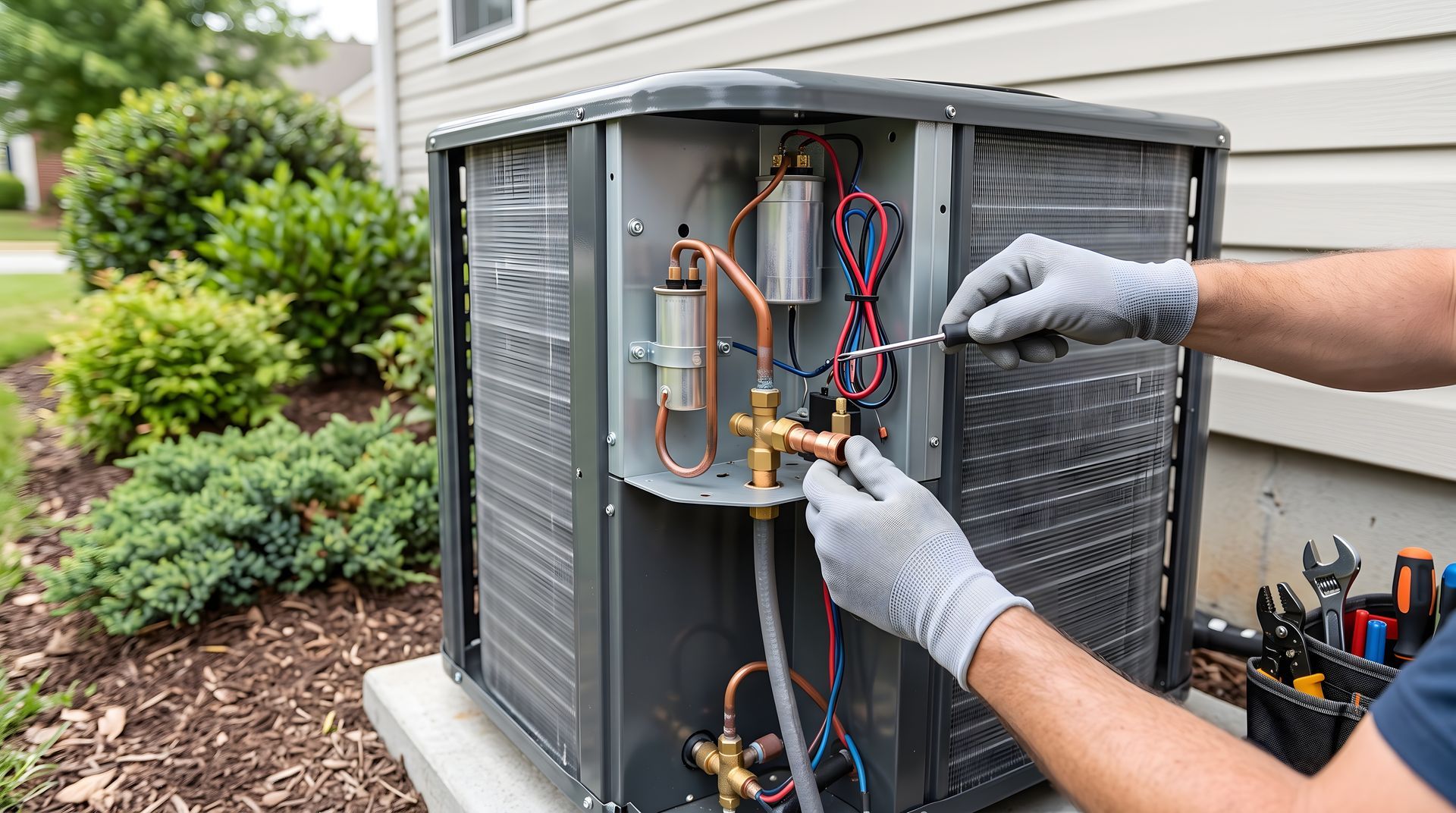
Technicians verify gas pressure and combustion using instruments during a proper tune-up. This step should not be skipped at elevation. If your system has never had an altitude-specific inspection, or if you have noticed any of the warning signs above, scheduling a professional assessment is a reasonable next step. A system that underperforms on a mild night can fall well short on the coldest days of the year. Reaching out to a provider of HVAC services in Monument, CO, before heating season peaks gives you the best chance of avoiding a failure when conditions are at their worst.
Ready to Make Sure Your Monument System Is Dialed In?
If you want professional guidance on altitude calibration, furnace tune-ups, or heat pump performance, Home Heating Service, Inc., serving Monument, CO, is a PPRBD-licensed and certified team that has been helping Colorado homeowners stay comfortable since 1988. Request a free estimate on new equipment or schedule a heating service visit to have your system inspected by a technician who understands local conditions. You can also contact the team online or call us at (719) 300-4802 to book an appointment.